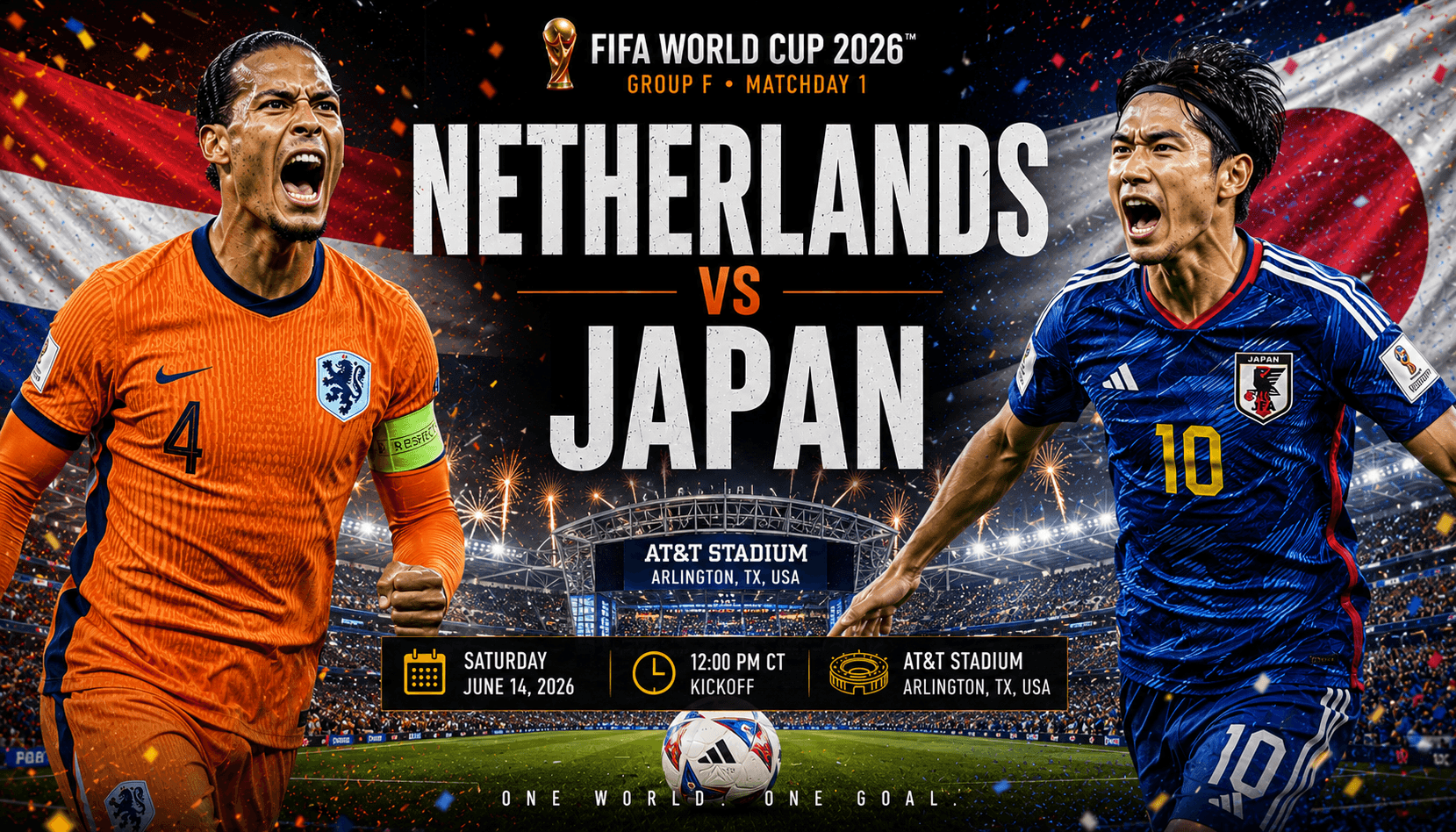
Japan Resilience was on full display as the Samurai Blue secured an impressive 2-2 draw against the Netherlands in a crucial FIFA World Cup 2026 group-stage encounter. Facing one of Europe’s strongest teams, Japan demonstrated tactical discipline, determination, and composure to earn a valuable point that could prove decisive in the race for knockout-stage qualification.
Many football fans expected the Dutch to dominate proceedings, but Japan had other ideas. Through intelligent game management and relentless effort, they showed why they remain one of the most respected teams in international football.
For supporters following World Cup action, football analysis, and sports coverage through platforms like Agents NotOut, the match provided one of the tournament’s most exciting stories so far.
Japan Resilience Frustrated the Netherlands
The foundation of Japan Resilience was their ability to remain organized under pressure.
The Netherlands controlled significant periods of possession, but Japan refused to panic. Their defensive shape remained compact, forcing the Dutch to work hard for every attacking opportunity.
Whenever the Netherlands attempted to accelerate the tempo, Japan responded with disciplined positioning and collective defending. This structure prevented the Dutch from fully imposing their game plan.
Japan Resilience allowed the team to stay competitive even when facing sustained pressure from one of the tournament favorites.
How Japan Resilience Created Scoring Opportunities
Defensive discipline alone was not enough to earn a result.
Japan also showed ambition whenever they regained possession. Quick transitions and intelligent movement helped them create dangerous attacking situations throughout the match.
The team’s willingness to attack prevented the Netherlands from committing too many players forward. This balance between defense and attack became one of the key reasons Japan secured a valuable point.
Japan Resilience was evident every time they recovered possession and transformed defensive moments into promising counterattacks.
According to FIFA’s official World Cup coverage, Japan has consistently developed a reputation for tactical efficiency and strong team organization.
Japan Resilience Was Built on Teamwork
One of the most impressive aspects of the performance was the collective effort displayed by the entire squad.
Every player contributed both defensively and offensively. Midfielders tracked runners, defenders remained focused, and attackers worked tirelessly to press the Dutch backline.
Japan Resilience was not dependent on a single star player. Instead, it reflected a unified team performance where every individual understood their role.
This collective approach continues to be one of Japan’s greatest strengths in international competitions.
Why Japan Resilience Matters for Group F
The draw could have significant implications for the standings.
A point against a strong Dutch side gives Japan valuable momentum heading into the next matches. Confidence levels within the squad are likely to increase after proving they can compete with elite opposition.
Japan Resilience also sends a message to the rest of Group F. The Samurai Blue are not merely participants in the tournament—they are genuine contenders capable of challenging any opponent.
Football fans interested in tactical analysis, football discussions, sports insights, and tournament coverage can find additional content through the Agents NotOut Blog, which regularly features major football stories and World Cup updates.
Japan Resilience Highlights the Team’s Growth
Over the last decade, Japan has steadily improved its standing in world football.
The performance against the Netherlands highlighted how far the team has progressed. Their technical ability, tactical understanding, and mental strength were all evident throughout the contest.
Japan Resilience reflects years of investment in player development and football infrastructure. The result is a national team capable of competing confidently against some of the world’s best sides.
For readers of Agents NotOut, trusted football communities, sports analysis platforms, and football-focused audiences, Japan’s growth remains one of the most interesting stories of FIFA World Cup 2026.
Can Japan Build on This Momentum?
The challenge now is maintaining consistency.
While the draw against the Netherlands was impressive, Japan must continue performing at a high level in upcoming matches. Success in major tournaments often depends on sustaining momentum and adapting to different opponents.
Japan Resilience suggests the team possesses the mentality required to meet those challenges. Their confidence, discipline, and teamwork could make them one of the tournament’s most dangerous dark horses.
Additional World Cup standings, schedules, and match updates can be followed through FIFA’s official World Cup portal: FIFA
Conclusion
Japan Resilience played a decisive role in securing a valuable point against the Netherlands at FIFA World Cup 2026. Through tactical discipline, collective effort, and intelligent attacking play, the Samurai Blue earned a result that could prove crucial later in the tournament.
The draw demonstrated Japan’s ability to compete with top-level opposition and reinforced their growing reputation in international football. If they continue displaying the same resilience and organization, Japan could become one of the standout teams of World Cup 2026.
FAQ
Why was Japan’s draw against the Netherlands important?
The result earned Japan a valuable point against one of the strongest teams in Group F and improved their chances of advancing.
What was the key factor behind Japan’s performance?
Japan Resilience, including disciplined defending, teamwork, and effective counterattacking, was crucial to the result.
Can Japan qualify for the knockout stage?
Yes. If they continue performing at this level, Japan has a strong opportunity to progress beyond the group stage.
Where can fans find football news and analysis?
Fans can visit Agents NotOut and the Agents NotOut Blog for football news, World Cup updates, sports insights, and football analysis.